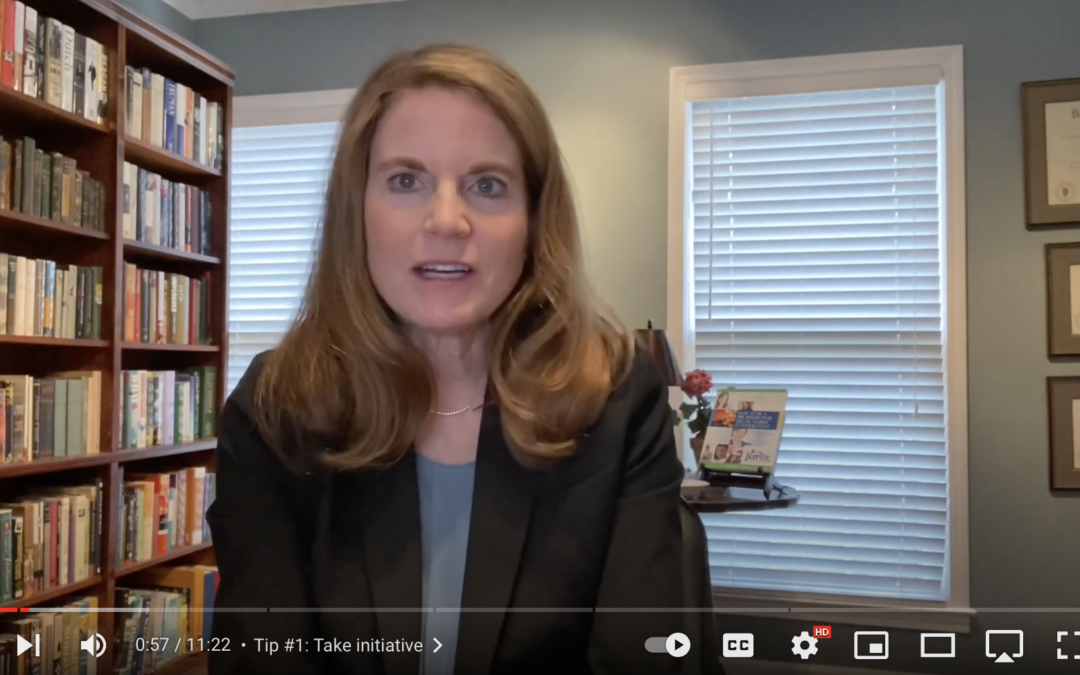
WATCH the video so you can be successful as a Professional Legal Nurse Consultant (PLNC). Let’s quickly cover the 5 tips you need to be a successful PLNC. In the video, you’ll get takeaways you can use today. It’s well worth your time!
Five Tips To Be A Successful Professional Legal Nurse Consultant
Take initiative. Constanty evaluate yourself and your performance. This is the best way to achieve career success. Pitch new solutions. Be willing to take on more projects. (You get paid by the hour, so why not?).
Use your nursing experience to generate income as a Registered Nurse. It’s quality not quantity. Years of experience don’t matter as much as the types of clinical experience you’ve had.
Continuing nursing education and development. The pursuit of nursing knowledge is what matters. If you don’t know something, look it up.
Communicate your skills as a legal nurse consultant (+Bonus Tip). You’ll be interacting with the entire legal team: attorneys, clients of attorneys, paralegals, legal assistants, and othersl
Give attention to detail. The big picture is important, but don’t forget to focus on the details. Sometimes a chronology is useful when there’re a lot of facts.
Ask yourself “Would I hire me?” if I were this attorney.
You’re the “expert” and as a PLNC you’re valued for your expertise.
P.S. Want to expand your income, get our FREE Guide here.
First and foremost remember this nurses: Patients who like you tend not to sue you. This means to be nice to the patients, even if you don’t like them. While this is some of simplest pieces of information, it is also one of the most important. It is, after all, up to the patient to decide whether or not to sue you.
Commit yourself to showing kindness and patience to every person you treat. Approach each patient with the same smile and good attitude, regardless of your mood or stress level. You may be thinking that this is a given and that being “nice” is simply part of being a good and caring nurse.
Consider those patients you encounter who are not very nice to you, who are uncooperative or ungrateful. Even with these patients, strive to be good-natured. It is, of course, most challenging to be nice to the patients who you dislike.
As a nurse and Professional Legal Nurse Consultant (PLNC), you’ve devoted yourself to the welfare of those committed to your care. But not only should you be giving excellent, quality health care, you should consider giving it with a smile if for no other reason than to avoid getting sued.
“The patient decides whether or not to file a lawsuit.”
This is so important for the simple reason that the patient decides whether or not to file a lawsuit. Let’s say an error was made, it’s the patient who determines if a lawsuit will result and, if so, who will be blamed. Believe it or not, if you were friendly and kindhearted, the patient will be less likely to place blame on you if an error occurs. Likewise, they will be less likely to be looking for areas of misconduct or inaccuracy if they personally liked you. We generally don’t sue people we like. It’s just human nature.
The same applies to your patients’ families. Despite disagreements, bad attitudes or just general meanness, you must apply your patience and compassion to them as well. If the patient is deceased or incapacitated, the patient’s family will be the deciders of beginning any litigation. They may also be influential in encouraging the patient to file suit especially if they are present during their care and/or treatment.
Remember, you as the nurse and PLNC, are encountering a patient and their family at a particularly difficult time. Illness and medical treatment are often met with fear, anxiety and tense emotions. Be understanding of these extenuating circumstances and how it might justify impolite or hostile behavior. Meeting such behavior with equal anger and contempt is not only unproductive, but it could also lead to you being unnecessarily sued.
P.S. Reduce your liability and get our FREE Guide here.
Nurses asked me to create a video to tell them why I created JurexNurse.com. Thank you for asking. I’m honored to it.
In 2006, I founded JurexNurse.com so that legal nurse consultant certification could be both comprehensive AND affordable. As an attorney, I have handled hundreds of legal matters where there was a need for properly trained and certified legal nurse consultants. I answered that need by creating the Professional Legal Nurse Consultant (PLNC) Certification course.
I must first back up and tell you WHY I became a Registered Nurse (RN). When I was 15 years old, my mother was in a car accident. After two months of hospitalization she passed away. It’s because of this experience that I chose the nursing profession. At Vanderbilt University, I obtained my Bachelor of Science in Nursing (BSN) and I immediately started practicing pediatric nursing. From there, I went into psychiatric-mental health nursing.
After getting my Master of Science in Nursing at Vanderbilt University, I taught pediatric nursing as well as psychiatric-mental health nursing prior to entering law school.
At Vanderbilt Law School, my goal was to combine my nursing and legal background to help nurses reduce their liability. Having accomplished that goal defending nurses in medical and nursing malpractice cases, I joined Johnnie Cochran at The Cochran Firm – Memphis (now called Morgan & Morgan) until his death.
As an attorney, I founded JurexNurse.com because I saw a huge need for nurses to be properly trained and certified as Professional Legal Nurse Consultants (PLNC). JurexNurse.com was founded on the mission (below) we still hold today.
Mission The mission of Jurex is to provide high-quality, flexible, and affordable certification training to nurses to allow them to assist attorneys in medical-legal cases. It is our goal to train each nurse to be a professional, dependable, and valuable part of the legal team. Through certification and ongoing training, we seek to keep nurses on the cutting edge of developments in the medical-legal field.
Giving back to the nursing community is IMPORTANT to me! Through volunteering during this pandemic to helping with the pro bono legal needs of individuals, this is my way of saying thank you for the opportunities that nursing and the law have provided to me.
P.S. If you’d like to become a Professional Legal Nurse Consultant (PLNC), go here.
A lot has happened over the past two years which permanently changed nursing and legal nurse consulting practice. The way you, as a certified Professional Legal Nurse Consultant (PLNC), review medical records will never be the same as pre-pandemic. You need to know what the legal landscape is now and going forward to make the necessary adjustments.
Let’s look at selected nursing challenges that the Covid pandemic has brought. In order to be an effective PLNC, you need to be able to size up the current documentation situation. Pre-pandemic, documentation was, on average, ample. Since the coronavirus outbreak, you’ll find charting has suffered.
Documentation Has Suffered In your medical record review, your focus is almost entirely on the patient’s history and treatment course. You’d expect to find what you’re looking for in the Medication Administration Record, the Nurses’ Notes, Healthcare Providers’ Orders, Progress Notes, and any number of sections. Absent those entries, the assumption would be that it wasn’t done.
After all, that’s what nurses are taught in nursing school. We’re told the old adage “if it’s not documented, it’s not done”. That is not necessarily true anymore. Covid has taught us that. With nurses and other healthcare workers completely overwhelmed, guess what went by the wayside? DOCUMENTATION.
Without the benefit of documentation, the challenge becomes how do we figure out what was, and was not, done for the patient? This is where your Professional Legal Nurse Consultant skills come into play. You need to make a list of what documentation should have been present but wasn’t. Furthermore, you need to make a “Missing Documents” list specifically enumerating the documents that are not there but should’ve been completed.
Nurses Not Fully Prepared For Critical Care Practice You’ll see in the patients’ charts nurses are likely not documenting in the manner you’d expect if they aren’t used to working in that specialty. For example, a pediatric nurse is likely not used to working on an Adult Covid Unit. This is especially problematic as the medication dosing for children versus adults can be significantly different. A pediatric nurse administering adult meds might not catch a medication error. You, as the PLNC, need to be on the lookout for this.
Not just with medications, but nurses who are floating to other specialty areas might not be used to providing clinical care in accordance with those standards of care. It’s up to you to research the standard of nursing care. Whether you’re consulting on legal cases for the plaintiff or defendant, you’ll need to provide some degree of research on nursing standards of care. Ultimately, you’ll have to decide if you think there was a breach of standard of care or if the facts support the standard of care.
Less Time Performing Nursing Assessments When a nurse cannot do an appropriate initial assessment of the patient, it’s a slippery slope. For example, if the nurse failed to appropriately assess the condition of the patient at hospital admission, and later there’s documentation of decubitus, the assumption will be the patient’s condition deteriorated during hospitalization. This could mean liability for the hospital and the nurses. If the patient was accurately assessed at admission and the wound was noted, this could reduce the liability exposure.
In your legal nurse consulting merit review, carefully read all nursing assessments. Are they thorough? The answer might be “yes”, but you need to decide what should’ve been in them. If your answer is “no”, be prepared to explain why.
Crises Occur Online and Offline Just because you didn’t see anything noteworthy in the medical records during your legal nurse consultant review doesn’t mean there isn’t a problem. If you’re reviewing the medical records in support of the nurse, see if you have access to Incident Reports. Still yet, see if you are allowed to read employee files, but these are usually protected documents.
If you’re reviewing records on behalf of the hospital, you might ask the attorney for their notes of the meeting or risk management’s notes. These can provide even more info that can help paint the full picture.
You need to know the legal landscape has forever changed when it comes to legal nurse consultant medical record reviews. What you might’ve come to expect from patient’s hospital or nursing course is not necessarily the norm anymore. Stay current by reading articles, blogs, and other scholarly material on how nursing practice has evolved.
Your Professional Legal Nurse Consultant skills are invaluable. Be proud. Be smart. Be sure to stay ahead of the pandemic, or endemic, curve.
P.S. Get your FREE Guide here so you can stay up-to-date on legal nurse consulting.
Your Professional Legal Nurse Consultant (PLNC) Certificationresume is your personal, and most significant, marketing tool that’ll help you shine in your legal nurse consulting career. When you reach out to attorneys to assist them by reviewing medical records in cases, your resume speaks volumes. That’s why it’s essential you take this opportunity to make the most memorable impression!
Your resume should be designed to show off your skills and talents. It’s your opportunity to boast, but in a somewhat humble way.
Showing an attorney your nursing skills, experience, and education is an easily digestible format is absolutely key. The attorney doesn’t want to go fishing around for this essential info.
Five Tips To Make Your Resume STAND OUT!
1.Organize your resume into sections. There should be a rhyme and reason why you’ve grouped corresponding information into the same section.
Use These Sections:
Contact Info
Education
Experience
Licenses and Certifications
Publications (if none, delete this section)
Memberships and Activities
Hobbies and Interests (not required, but definitely makes you more relatable)
2. Do NOT include this information: Don’t include the actual word “Resume”. It’s clear that this is your resume. Career Objectives: while you’re used to objectives being part of a nursing school syllabus, don’t include career objectives on your resume. You’ll essentially be saying why you want the job in your email to the attorney.
3. Send your resume via email. You don’t need to print it out and mail it. Make it easy for the attorney to open the PDF of your resume by telling the attorney in your email that you’ve attached your resume.
4. Research the attorney and the law firm, or company, ahead of time. This way, you can include the information you’ve gleaned from their website in your cover email. It shows you’ve done your research. That’s impressive!
5.Keep your resume to 1 – 2 pages. You can say in your cover email that you’ve attached your resume, but you have a more extensive curriculum vitae (CV) if they want it. This shows you’re mindful of the attorney’s time in not providing a long document to review, but that you have it if they want it.
As it’s been said, remember this expression and do it: “Measure twice, cut once”. Read and reread your resume BEFORE you click “Send”. You don’t want to have any typos in it.
Go get ‘em, PLNCs, with a striking resume that’s sure to make you shine.
We all want success. We want success in our legal nurse consultant careers. It’s natural to want it, but how do you actually attain success as a Professional Legal Nurse Consultant (PLNC)?
Let’s look at other PLNC’s methods for success, which we’ve compiled below for you.
Success Tips For Professional Legal Nurse Consultants By Professional Legal Nurse Consultants Be accessible and available for work. Whenever an attorney, paralegal, or legal assistant contacts you, be ready to take on the assignment. No excuses. If they’re reaching out to you, it’s for a reason. They want and need you to review medical records in a case or potential case.
Oftentimes, you’re being contacted at what you perceive to be “the last minute”. Maybe they’ve had the medical records for a while, maybe they meant to send them to you earlier, or maybe they’ve tried others first. Regardless, if you want the experience, look for the good in the situation. You just might get other cases if you’re willing to review these records.
Be helpful. Nothing worse than constantly being a naysayer. There could be good reason not to recommend to the plaintiff’s attorney that they take the case. Carefully and meticulously spell it out for them. You want to be perceived as a resource. Someone they can go to for your scholarly opinion. Not someone who only finds the negative in a situation.
The most helpful PLNC will be able to look at both sides of a case: the strengths AND the weaknesses. Most medical records have good and bad aspects. You job is to discover those and let your attorney know them. No surprises later. Be helpful now.
Be confident. You’re being asked to review the medical records because you have the wherewithal to know what you’re doing. You have nursing skills and nursing experience. Parlay those skills and experience into reviewing medical records.
As a nurse, you’re used to reading others’ entries in the medical record. You know the value of careful nursing documentation. You were taught that in nursing skills and you’ve carried that talent forward in nursing practice. Draw on your confidence when you’re working for an attorney as a PLNC.
Be thorough. As it’s been said “leave no stone unturned”. This means review the medical records completely, even if the stack is taller than your head. You’re being PAID to review the medical records.
Know that there could be missing pages. Plan on this. Make a list of documents you’d expect to be in the medical records but aren’t there. This, alone, can make you invaluable to your attorney.
Be knowledgeable. Let your fingers do the researching. Could be that there’s a disease or condition you’re unfamiliar with, or never even learned about in nursing school. No problem. Look it up.
There’ll kinds of ways to do “research”. Start where you’re most familiar. Use your phone, tablet, or laptop computer. Put in keywords and start reading up. You can do it. This is how most healthcare providers “look up” aspects of health care that they’re unsure about.
Be involved. There’s no substitute for connecting with other PLNCs. Join the PLNC Facebook Community. It’s great to see what others are talking about and how they’ve solved problems and issues.
Go to conferences and events. Whether that’s in-person or virtual or a mix of these. You’ll meet others, learn something, and get some great takeaways.
Don’t forget to interact with the vendors and exhibitors. One can never have too many friends. You might even get referrals from them. Remember, we’re all just six degrees of separation.
Be thankful. You got the job to review the medical records. That’s an honor! The law firm, or company, thought enough of you to ask you to review the medical records and give your opinion.
You ought to be pleased that you’re the PLNC who gets to review the medical records! Your reward? Being selected and earning the $$$ from it.
With these tips in mind, go be successful in your Professional Legal Nurse Consultant practice.